
For Filmmakers

Hand-to-Hand Cinema: How IRL Sharing Solves Indie Film’s Distribution Crisis

There are 77 million Americans who want to watch independent films. Only 36.7 million do. The gap isn’t a lack of desire — it’s a failure of discovery. ta8er closes it with a mechanism the indie world already trusts: personal recommendation.

February 18, 2026

15 min read

The Distribution Crisis No One Is Solving
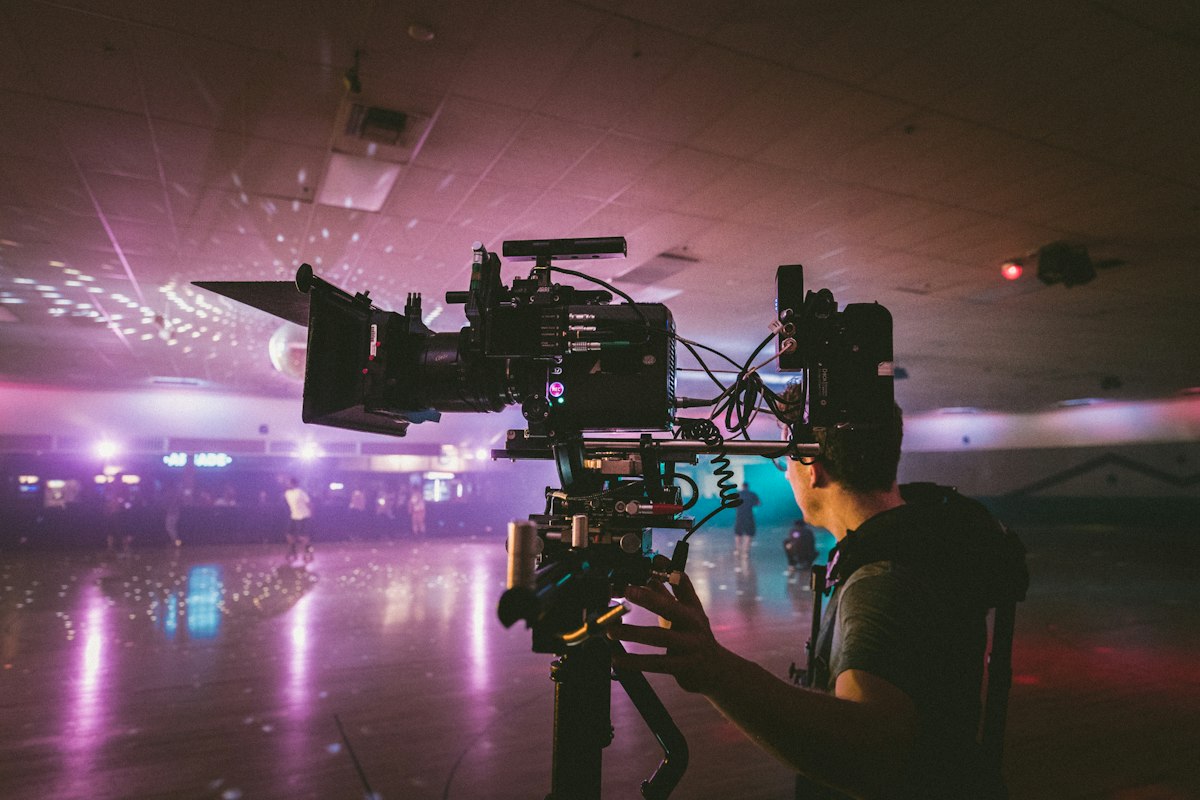
Independent filmmaking has a paradox at its core: the work has never been better, the tools have never been cheaper, and the audience has never been harder to reach.
Filmmaker silhouette with camera equipment

Behind the camera — independent filmmakers have mastered the craft of making films on micro-budgets. Distribution remains the unsolved problem.

The global independent film distribution market was valued at $5.4 billion in 2024, projected to reach $10.2 billion by 2033. But those numbers mask a grim reality on the ground. The indie box office fell 17.7% in 2024 — on top of years of post-pandemic contraction. In the UK, indie box office in 2023 was just $48 million, nearly a 50% drop from the prior year.

Of 18 films released since 2018 with budgets between $200,000 and $900,000, only one managed to break even. That budget range — where most independent filmmakers operate — is now described as “the most dangerous zone” in indie film economics.

The minimum guarantees that once let filmmakers recoup budgets have all but disappeared. Streaming platforms replaced them with one-time licensing fees and eliminated backend participation. Netflix has flatlined content spending at $17 billion annually and dramatically slowed its festival acquisition pipeline. Apple TV+ abandoned its theatrical ambitions entirely.

The Festival Bottleneck

The traditional path to distribution runs through film festivals — and the math is staggering.

Sundance: Under 1% Acceptance

Sundance receives over 15,000 submissions for approximately 151 slots — a success rate of under 1%. For feature documentaries at Sundance 2025, the acceptance rate was 2.1%: one in fifty.
Programming decisions at major festivals are openly acknowledged as political. Films are favored if they involve well-known directors, agencies, producers, or actors — factors that have nothing to do with the quality of the work.

The Pseudo-Festival Trap

A thriving ecosystem of pseudo-festivals has emerged — events attended primarily by other filmmakers rather than industry gatekeepers or press. Filmmakers pay submission fees with no real exposure benefit, creating a cycle where the festival circuit extracts money from the people it claims to serve.
The average acceptance rate across all major international festivals is 13%, but top-tier festivals fall below 1%. For every Tangerine or Anorathat breaks through, thousands of films never find their audience — not because they’re not good enough, but because the gatekeeping infrastructure can’t process the volume.

Algorithms: The Wrong Tool for Art

Streaming platforms were supposed to democratize distribution. Instead, they created a new kind of invisibility.
Empty movie theater with rows of red seats

The empty theater waiting to be filled — 77 million Americans want to watch indie films, but algorithms keep steering them toward tentpole releases.

The 17% Problem

Only approximately 17% of indie films get promoted by major streaming algorithms. The rest exist on the platform but are effectively invisible to the audience. Algorithms measure “audience velocity” — engagement in the first 24 to 72 hours after release. A weak launch becomes a self-fulfilling prophecy: low clicks signal low quality, so the platform deprioritizes the title permanently.

Sundance Now Goes Algorithm-Free

The problem is so widely recognized that Sundance Now is rebranding itself specifically as an “algorithm-free” streaming service for indie film — a direct acknowledgment that algorithms are the enemy of discovery for independent content.

The 40 Million Person Gap

A Shorenstein Center study found that 77 million Americans are willing to pay for an indie-focused streaming service, but only 36.7 million currently watch indie films. That 40-million-person gap exists purely because of discovery failure, not lack of interest.

The audience is there. They want the films. No platform has figured out how to connect them — because every platform relies on the same algorithmic discovery model that structurally disadvantages indie content.

How Indie Films Actually Spread: Person to Person

Every major indie success story shares a common mechanism: not algorithms, not advertising, not festival laurels — but one person telling another person they need to see this film.

The Duplass Brothers: Tour It Yourself

Jay and Mark Duplass made The Puffy Chair for $15,000. It premiered at Sundance 2005, but the Duplasses didn’t wait for a distributor to find an audience. They personally toured the film, screening it in small venues, talking to audiences, building word of mouth one conversation at a time. Mark’s advice for indie filmmakers: start with a $500 short, self-distribute, submit to second and third-tier festivals as proof of concept.

Hundreds of Beavers: The Microdistribution Template

Budget: $150,000. No traditional distributor. The filmmakers spent over a year playing 50 different festivals, then self-booked theaters across the Midwest for one-night screenings, launched a 12-day vaudeville-style road show from Minneapolis to Toronto, and showed up in beaver costumes at theaters. Results:
  • Total worldwide gross: over $700,000 — nearly 5x the budget
  • $5.1 million in earned media value
  • 11.7 million organic views across platforms
  • Became the second-highest rated film on Letterboxd as of mid-2024
  • Now the defining case study for what IndieWire calls "microdistribution"

Hundreds of Beavers didn’t go viral because an algorithm picked it up. It spread because the filmmakers went to theaters, stood next to audiences, and made the recommendation impossible to ignore.

Issa Rae: YouTube to HBO via Community

Issa Rae launched The Misadventures of Awkward Black Girl on YouTube in 2011 with zero budget. She raised $56,269 from 1,960 donors on Kickstarter for Season 2. The series accumulated over 25 million views, won a Shorty Award, attracted backing from Pharrell Williams, and led directly to her HBO deal for Insecure. She built 200,000 loyal subscribers through grassroots social strategies — not algorithmic discovery.

Sean Baker: From iPhone to Palme d’Or

Tangerine was shot entirely on an iPhone 5s for $100,000 and grossed $936,000. Anora (2024) was made for $6 million, won the Palme d’Or at Cannes, grossed $58.2 million worldwide, and swept the 2025 Oscars. Baker built his career not through platform deals but through festival presence, community engagement, and the kind of person-to-person buzz that algorithms cannot manufacture.

Letterboxd: Proof That Community Drives Discovery

Letterboxd hit 17 million members in 2024 — up from 1.8 million in 2020. A new member joins every five seconds. In 2024 alone, members wrote 96.4 million reviews, marked 701 million films watched, and made 6.8 million lists.
Distributors now regularly cite Letterboxd engagement when deciding whether to open a film theatrically. The platform has become a bridge between physical community enthusiasm and commercial viability — proof that when people trust the recommendation source, they show up.
What Letterboxd demonstrates is that film discovery is fundamentally a trust problem. People watch films recommended by people they trust — friends, critics with track records, community members who share their taste. The algorithm is a stranger with an agenda. The friend who saw the film at a festival is not.

Enter the Bump: Distribution Without Gatekeepers

ta8er’s bump model maps directly onto how independent films have always found their audiences. A bump is the transfer of content access from one person to another, face to face, via NFC phone tap or QR code scan. It requires physical proximity, intention, and shared attention.

The Festival Bump

A filmmaker premieres their short at a regional festival. After the screening, they open ta8er and bump audience members in the lobby. Each bump transfers access to the film — plus any additional content the filmmaker has made available: behind-the-scenes material, director’s commentary, their next project’s trailer. Those audience members carry the film home and re-bump friends at dinner parties, film club meetups, coffee shops.
  1. The filmmaker seeds 20 bumps at the festival screening
  2. Enthusiastic audience members re-bump friends and film community peers
  3. Each re-bump costs the bumper their own purchased bumps — a natural quality filter
  4. The filmmaker sees a full propagation tree: who bumped whom, where, when
  5. Bump velocity by city tells the filmmaker where to screen next

The Community Screening Model
Independent cinemas, film societies, and community screening events become bump accelerators. A single screening of 100 people can generate hundreds of bumps as the filmmaker seeds the audience and passionate viewers spread the film through their physical social networks.
Audience at a film screening event

Community screenings — the natural habitat of independent cinema, where films find their audiences through shared experience and personal recommendation.

This isn’t hypothetical. It’s exactly what Hundreds of Beaversdid for a year — except without the infrastructure to track, attribute, or monetize each person-to-person transfer. ta8er provides that infrastructure.

The Filmmaker’s Propagation Map

Unlike Netflix (which withholds all viewership data) or festivals (which provide no post-screening analytics), the bump model gives filmmakers something they’ve never had: a complete map of how their film spreads through real social networks.
  • Geographic intelligence: See which cities generate the most bumps. Plan your next screening tour based on real data, not guesswork.
  • Propagation depth: See how many “generations” of bumps your film generates. A film that consistently re-bumps 3+ levels deep has genuine word-of-mouth momentum.
  • Audience identity: Know who your advocates are — not anonymized streaming data, but real people who physically shared your work with others.
  • Revenue attribution: Bump purchases generate revenue. Every bump in the chain represents someone who paid to share your film.

Why the IRL Constraint Matters for Film

  1. Film is communal. Independent cinema has always thrived in shared spaces — theaters, community centers, living rooms. The bump preserves this communal quality. You don’t bump someone a film link from across the internet. You bump them because you’re both at a screening, both at a film festival, both in a space where cinema lives.
  2. Trust transfers in person. A person standing next to you saying “you need to see this film” has a conversion rate that approaches 100%. A streaming algorithm suggesting the same film has a conversion rate measured in single-digit percentages.
  3. Scarcity filters for quality. Bumps are finite and purchased. A cinephile who bumps a film is making a deliberate, costly choice to advocate for it. This creates a natural quality filter that no algorithm can replicate.
  4. Physical screenings become economic events. Every screening is now also a distribution event. The filmmaker isn’t just showing their film — they’re seeding a distribution network that continues to operate long after the lights come up.

The Old Model vs. The Bump Model

Current ModelBump Model
Festival gatekeepers decide who gets seenAudiences decide through person-to-person sharing
Streamers withhold all viewer dataFull propagation map: who shared with whom, where, when
Algorithms bury 83% of indie filmsDiscovery driven by trusted human recommendation
Minimum guarantees have disappearedBump purchases create direct revenue per share
Festival laurels expire after a yearBump chains keep propagating as long as the film resonates
"Going viral" = algorithmic luck or marketing spend"Going viral" = traceable spread through real social networks
40 million potential viewers can’t find indie filmsDiscovery happens where the audience already is: in person

Why Filmmakers Should Care

The indie film distribution problem has always been a trust and discovery problem. There are films that deserve audiences, and audiences that deserve films, and no existing platform has built a bridge between them that doesn’t run through an algorithm or a gatekeeper. What has always worked — and what the data from Letterboxd, Hundreds of Beavers, Tangerine, and the Duplass brothers all confirm — is trusted human recommendation at the point of physical presence. The Puffy Chair spread because the Duplasses toured and personally told people about it. Hundreds of Beavers spread because the filmmakers showed up in costume at theaters. Tangerine spread because people couldn’t believe what they were seeing and grabbed the person next to them.

ta8er’s bump mechanic isn’t a novelty. It’s a formalization of the hand-to-hand, person-to-person recommendation effect that has driven every indie film success story in history. It removes the algorithm entirely and puts the trust signal exactly where indie film has always lived: between two people who were both in the same room.

References

  1. DataIntelo. (2024). Independent Film Distribution Market Report, 2024–2033.
  2. Filmmaker Magazine. (2023). The Truth About Independent Film Revenue.
  3. IndieWire. (2024). Introducing Micro-Distribution: How Hundreds of Beavers Reinvented Indie Film Release.
  4. IndieWire. (2024). Untapped Market: 40 Million Americans Will Pay for Indie Streaming.
  5. IndieWire. (2024). Reaching Audiences Instead of Gatekeepers.
  6. Deadline. (2025). Letterboxd Hit 17 Million Members — Indie Cinema’s Secret Weapon.
  7. Deadline. (2024). Anora Wins Palme d’Or at Cannes.
  8. Wrapbook. (2024). Tangerine Full Budget & Income Breakdown.
  9. Fast Company. (2014). How Issa Rae Went From Awkward Black Girl to Indie TV Producer.
  10. No Film School. (2017). Mark Duplass: 9 Secrets to a Career in Indie Film.
  11. Hollywood Reporter. (2025). Sundance Now to Rebrand as Algorithm-Free Streaming Service.
  12. Shorenstein Center. (2024). U.S. Independent Film Audience and Landscape Study.
  13. Cinema of Commoning. (2024). The Embodied Cinema: Why We Still Need the Physical Space.
  14. Variety. (2024). UK Independent Film Distribution Crisis.
  15. Film Threat. (2024). Indie Film Distribution in the Digital Age.
← Back to all articles

© 2026 Abstract Class Consulting Inc.