
For Comics

Bump the Room: How IRL Sharing Fixes Comedy Distribution

Stand-up comedy has always spread the same way — one person grabs another and says ‘you have to see this comedian.’ Every digital platform has tried to replace that moment. ta8er is the first to formalize it.

February 18, 2026

14 min read

A $10 Billion Industry With a Discovery Problem
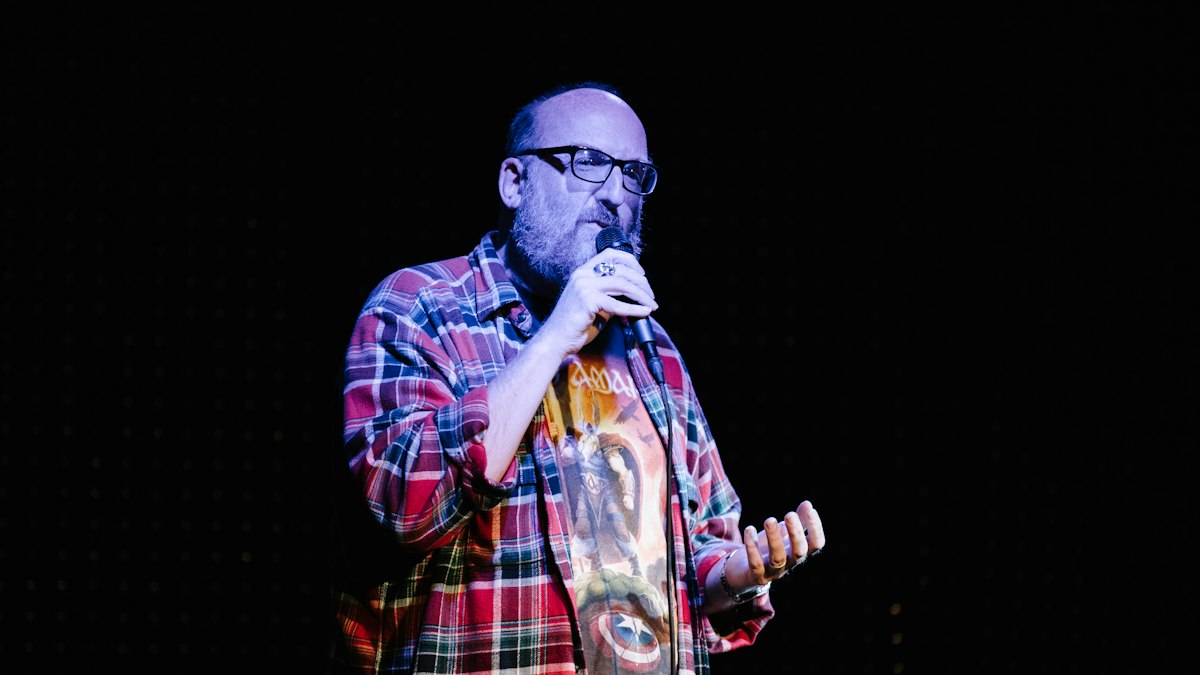
Stand-up comedy is booming. Gross touring revenue in the U.S. has nearly tripled in a decade — from $371 million in 2012 to $910 million in 2023. The top 10 touring comics grossed a combined $397 million in 2024, a 52% jump from the prior year. There are roughly 1,826 comedy clubs across the country. The global industry is projected to hit $10 billion by 2025.
Microphone on a stand-up comedy stage with dramatic lighting

The comedy club stage — where careers are built one set at a time, and audiences discover new voices through the irreplaceable energy of a live room.

But here’s the paradox: despite all that growth, the economics for working comics are brutal. Open mic sets pay nothing. An opening act earns $25–$50. A feature spot might pay $300. A weekend club run: $400–$1,200. Roughly one in 100 comedians makes enough to scrape by; one in 1,000 lives comfortably from stand-up alone.

The wealth concentrates at the very top. Kevin Hart earned $70 million in 2025. The comedian performing at your local club on a Tuesday — the one who made you laugh harder than anything on Netflix — probably drove three hours to get there and is sleeping on someone’s couch.

The problem isn’t that people don’t want comedy. It’s that the existing discovery mechanisms — algorithms, streaming deals, social media feeds — are structurally hostile to how comedy actually works.

The Algorithm Cannot Take a Joke

Comedy is context-dependent by nature. A punchline that kills in a room can look like a policy violation to a content moderation bot. This isn’t a hypothetical — it’s the daily reality for working comics on every major platform.

YouTube: Demonetized for Being Funny

YouTube’s automated demonetization system flags content based on keywords and topics without understanding comedic framing. A comedian can follow community guidelines precisely and still lose monetization because the algorithm cannot distinguish between a violent premise stated for comic effect and genuine harmful content. Comics like Mark Normand and Shane Gillis have faced ongoing moderation friction despite building massive audiences on the platform.

TikTok and Instagram: The Wrong Format

Short-form platforms favor frequent posting — 3 to 5 times per week — and punish creators who don’t maintain the cadence. This structurally disadvantages long-form stand-up comedy. A tight five that took months to develop gets compressed into a 60-second clip that strips away the setup, the room energy, and the cumulative tension that makes comedy work.

Netflix: The Golden Handcuffs

Netflix has aired more than 350 specials from over 200 comedians since 2013. But the deal terms have deteriorated sharply. In 2022, Netflix shifted to licensing some specials for only two years at $200,000 — forcing comedians to front their own production costs. Output dropped nearly in half: 33 specials in the first half of 2022 versus 16 in the first half of 2023.

What Netflix doesn’t share

  • No audience viewership data shared with the comedian
  • No backend residuals
  • No demographic information to plan tours
  • The recommendation algorithm controls over 75% of what viewers actually watch — your special can exist on the platform and be effectively invisible
In 2023, nine of the top 10 highest-grossing touring comedians had Netflix specials. Netflix functions as a marketing vehicle for touring — not as a standalone income source. But comedians surrender all data and control to get that exposure.

How Comedy Has Always Spread: The ‘You Have to See This’ Effect

Before algorithms, before streaming, before social media, comedy spread the same way for decades: someone saw a comic at a club, turned to their friend, and said “you have to see this person.”
Performer on stage during an open mic night at a comedy club

Open mic night — the proving ground where every great comic started, performing for a room of other comedians and the occasional civilian who wandered in.

This is how club careers were built. A comedian performs well in one city’s rooms, gets recommended by club owners and bookers to other markets, and reputation spreads via phone calls between bookers and word of mouth among audiences. The currency wasn’t data — it was trust.

Don’t Tell Comedy: The IRL Model at Scale

Don’t Tell Comedy, founded in 2017, has operationalized word-of-mouth as its entire business model. The venue is secret until the morning of the show. The comedians and location are revealed hours before. The result:
  • Now operating in over 250 cities worldwide, on pace for 4,500+ shows across 200 cities in 2024
  • Comedian Ralph Barbosa performed at a Don’t Tell show; the clip hit 4.6 million YouTube views, directly leading to his Netflix special Cowabunga, which debuted at #3 on Netflix’s Top 10
  • Susan Rice performed at a Don’t Tell show, was invited to LA, her set went viral with over 100 million views, and she was invited to America’s Got Talent
  • Don’t Tell explicitly draws younger audiences and first-timers who don’t attend traditional comedy clubs

Comedy’s boom has been accompanied by a proliferation of smaller venues. Audiences gravitate toward in-person, intimate events because online entertainment is no substitute for participating.

Bringer Shows: Word-of-Mouth as Ticket Price

“Bringer shows” formalize the word-of-mouth model: each performer must bring 5 to 15 people to earn stage time. This directly rewards comedians whose social networks are actively engaged. The conversion point is always the live room — someone who was there telling someone who wasn’t.

The Independent Path: Real Numbers

A growing number of comics have rejected the platform model entirely — and the economics are compelling.

Louis CK: $1 Million in 12 Days

In December 2011, Louis CK sold his special Live at the Beacon Theaterdirectly from his website for $5. No TV deal, no streamer, no distributor, no DRM. In four days: 110,000 sales, $550,000 gross. In 12 days: over $1 million. By three weeks: approximately 220,000 purchases. He publicly disclosed the breakdown: $250,000 to production costs, $250,000 in staff bonuses, $280,000 to charity, $220,000 kept personally.

Shane Gillis: Patreon as Foundation

After being fired from SNL in 2019, Gillis built an independent audience through his podcast Matt and Shane’s Secret Podcast, which became the most subscribed podcast on Patreon — estimated at $207,600 per month. That independent infrastructure gave him leverage to eventually land a Netflix special on his own terms.

Mark Normand: YouTube to Netflix Pipeline

Normand’s self-released 2020 special Out to Lunch amassed over 12 million views on YouTube. That audience led directly to his 2023 Netflix special Soup to Nuts, which hit Netflix’s Top Ten for weeks.

KevOnStage: Patreon-Only Special

KevOnStage recorded his LA special exclusively on his Patreon shop, bypassing all streamers. It became his highest-grossing project — over 1,000 sales with no intermediary taking a cut.

The pattern

Every successful independent comedy release shares a common thread: the comedian built a loyal audience through real relationships— live rooms, word of mouth, personal connections — and then monetized that trust directly. The platform was an afterthought.

Enter the Bump: Physical Sharing for Physical Comedy

ta8er’s bump model maps directly onto how comedy has always spread. A bump is the transfer of content access from one person to another, face to face, via NFC phone tap or QR code scan. It requires physical proximity, intention, and a moment of shared attention.

After the Show: The Natural Bump Moment

Imagine this: a comedian finishes a killer set at a 200-seat club. The audience files out buzzing. A fan opens ta8er, holds their phone up, and bumps five friends in the lobby. Those five friends now have access to the comedian’s content — unreleased clips, early access to the next special, behind-the-scenes material. The comedian’s bump count increments five times. Each of those bumps is permanently linked to that specific moment, that specific venue, that specific show.

“I discovered this comedian because Alex bumped me after the late show at the Comedy Store on a Saturday” is a fundamentally different relationship with comedy than “the algorithm recommended this based on my watch history.”

The Comedian as Seed Bumper
Comedians receive seed bumps with each content item. After a show, the comic can bump audience members directly — creating a first-party relationship with no intermediary. This is the digital street team: the comedian bumps their inner circle, those fans re-bump at work the next day, and the propagation chain maps the real social graph of how comedy spreads through communities.
Crowd at a live entertainment venue

The crowd after the show — where the real sharing happens. Every laugh remembered, every recommendation personal.

Bump Velocity as Booking Signal

For club owners. For bookers. For the comic themselves. Bump velocity — bumps per week, bumps per city, bumps per show — is a leading indicator of genuine street-level momentum. Not algorithmic amplification. Not purchased followers. Not inflated subscriber counts. Every bump in the count represents two humans who were standing next to each other, one of whom spent a finite resource to say: you need to see this comedian.
A comedian with 500 bumps and a comedian with 50,000 Instagram followers are conveying fundamentally different information. The bumps prove 500 in-person moments of genuine advocacy. The followers prove nothing at all.

Open Mics, Reimagined

Open mics could become bump generators. A comedian who can turn a 5-minute set at an open mic into 10 bumps in the parking lot afterward is demonstrating exactly the kind of audience connection that predicts a successful career. The bump count becomes a verifiable track record — a comedian’s cultural resume built from real moments, not metrics.

Why the IRL Constraint Matters for Comedy

  1. Comedy is contextual. A joke that works in a room often doesn’t work on a screen. The IRL bump preserves the context: the person recommending the comedian was in the room. They experienced the set. Their endorsement carries weight because it comes from a shared physical experience.
  2. Social accountability. When someone bumps you a comedian, they’re standing right there. They’re putting their taste on the line. This is the opposite of an anonymous algorithm — it’s a personal recommendation with skin in the game.
  3. Scarcity drives curation. Bumps are finite and purchased. A fan who bumps five comedians in a month is making deliberate choices about who deserves their advocacy. Compare to liking 500 comedy clips on TikTok — a gesture that costs nothing and signals nothing.
  4. The venue becomes a launchpad. Live shows become bump accelerators. A single show at a 300-seat club can generate hundreds of bumps as the comedian seeds the audience and enthusiastic fans re-bump friends. The physical density of a comedy show creates a natural viral moment that digital platforms can only simulate.

The Old Model vs. The Bump Model

Current ModelBump Model
Algorithms decide who sees your specialReal people in real rooms decide who hears about you
Netflix keeps all audience dataFull propagation chain: who bumped whom, where, when
Open mics build nothing permanentEvery open mic set can generate trackable bumps
Followers are free and meaninglessEvery fan cost someone a bump — a finite resource
Social media clips stripped of contextContent access tied to in-person recommendation
"Going viral" = algorithmic luck"Going viral" = physical, traceable spread through real social networks
Club bookers rely on gut and follower countsBump velocity is a verifiable signal of audience momentum

Why Comics Should Care

The comedy industry has always been built on the intimacy of the live room and the power of personal recommendation. Every platform that has tried to digitize comedy distribution has done so by removing those qualities — by replacing the trust of “you have to see this person” with the indifference of an algorithm. ta8er doesn’t replace the personal recommendation. It formalizes it. It makes it trackable, attributable, and economically meaningful — while preserving the one quality that has always made comedy discovery work: two people, in the same place, sharing something that made them laugh.

The bump isn’t a new invention. It’s what comedy fans have been doing forever. ta8er just gives it a name, a record, and a revenue model.

References

  1. Bloomberg. (2024). Stand-Up Comedy Has Tripled in Size Over the Last Decade.
  2. Pollstar. (2023). The Year in Comedy: Belly Laughs Are Booming Business.
  3. Axios. (2022). Netflix Cuts Comedy Special Checks.
  4. Axios. (2024). Comedy Industry Boom: Growth, Revenue, Netflix.
  5. VentureBeat. (2011). Louis CK’s Digital Distribution Experiment Clears $1M in 12 Days.
  6. CNN Money. (2011). Louis C.K. Tops $1 Million Sales of $5 Beacon Comedy Special.
  7. CNN. (2024). Don’t Tell Comedy: Stand-Up’s Secret-Show Revolution.
  8. CBC. (2024). Comedy Is Hotter Than Ever — and Business Is Booming.
  9. Frontiers in Psychology. (2025). Platform Humor Moderation: Context-Dependent Content Challenges.
  10. WorldMetrics. (2024). Comedy Industry Statistics.
  11. GlobeNewsWire. (2024). United States Comedy Clubs Industry Research Report.
  12. ComedyVille. (2025). How Much Do Stand-Up Comedians Really Make?
← Back to all articles

© 2026 Abstract Class Consulting Inc.